0
Brazil · data for latest available · data as of 26 October 2026 · printed 27 Oct 2026
2025
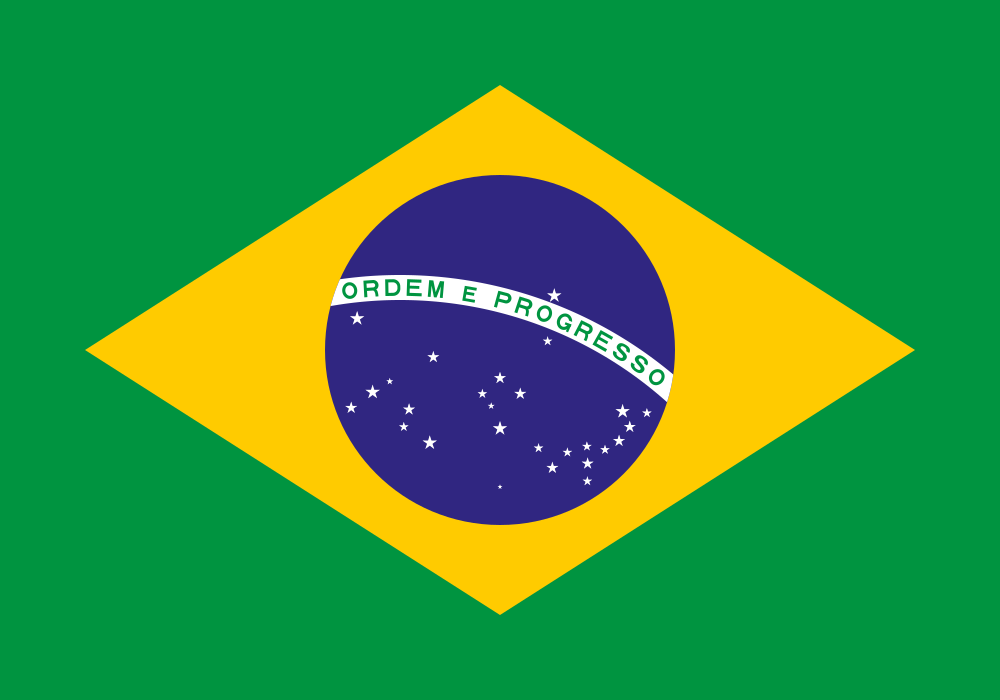
Flag of Brazil

Brazil

Latin America & Caribbean Capital Brasilia Upper middle income Nation age 204 years (since 1822) i BRA · BR
Index pillars
Foundations · roots i53
Strength · trunk i89
Quality of life · crown i47
Problems (higher = fewer) · dry branches i36
Direction (5-year change) · new shoots i13
CSV

In short

Brazil is 82nd of 196 countries in the NationsTree Index, with a score of 51.4 out of 100; its tree is 42 m tall.

It has 212.8 million people and an economy of $4.99 trn at purchasing power parity, 8th of 199 in the world.

Its strongest positions: Renewable freshwater per person (24th of 183), Renewable energy (53rd of 212) and Secondary enrolment (45th of 173).

Its weakest positions: Income inequality (Gini) (105th of 108), Government budget balance (175th of 192) and Homicide rate (129th of 145).

Over five years it fell from 63rd to 82nd in the index.

All data

Data as of 26 October 2026

Latest available value for each indicator, with its year. World rank is among countries with recent data (last 5 years of the series).

Land & people

65

Economy

50

Main industries

51

Trade

55
Exports i% of GDP 17.8% 153rd/183
Imports i% of GDP 17.5% 171st/183
Trade openness i% of GDP 35.3% 170th/183
Fuel exports i% of merchandise exports 16.1% 39th/170
Manufactures exports i% of merchandise exports 23.8% 99th/171
Food exports i% of merchandise exports 40.7% 40th/171
Ores & metals exports i% of merchandise exports 12.2% 36th/171
High-tech exports i% of manufactured exports 11.1% 58th/168

Natural resources

74
Oil rents i% of GDP 2.60% 35th/197
Natural gas rents i% of GDP 0.07% 63rd/197
Coal rents i% of GDP 0.01% 49th/195
Mineral rents i% of GDP 4.49% 24th/209
Forest rents i% of GDP 0.76% 60th/209
Arable land i% of land area 6.7% 124th/206

Tourism

65
Tourism receipts iUSD $3.10 bn 40th/175
Tourism receipts i% of exports 1.3% 144th/168
Outbound trips idepartures 10.6 m 18th/107

Society & health

53
Under-5 mortality iper 1,000 births 14.2 97th/196
Physicians iper 1,000 people 2.36 75th/174
Hospital beds iper 1,000 people 2.5 71st/145
DPT immunization i% of children 12–23 months 91% 93rd/193
Secondary enrolment i% gross 104.1% 45th/173
Old-age dependency ratio i% of working-age population 16.6% 91st/217
Health spending i% of GDP 9.7% 31st/193
Tertiary enrolment i% gross 69.7% 49th/150
Human Development Index iindex 0–1 0.786 84th/193
Extreme poverty i% of population 3.0% 69th/108

Infrastructure & digital

58
Access to electricity i% of population 99.8% 126th/215
Safely managed drinking water i% of population 88.6% 65th/150
Safely managed sanitation i% of population 55.0% 79th/144
Internet users i% of population 84.5% 84th/186
Mobile subscriptions iper 100 people 102 135th/210
Fixed broadband iper 100 people 24.1 78th/208
Rail lines iroute-km 32,6222007
Air passengers carried ipassengers 95.4 m 10th/161

Environment & energy

66
Renewable energy i% of final energy use 46.5% 53rd/212
Forest area i% of land area 58.5% 34th/214
Energy use per person ikg oil eq. 1,528 74th/149

Institutions & safety

38
Government effectiveness iscore 0–100 51.6 111th/205
Control of corruption iscore 0–100 40.4 123rd/207
Rule of law iscore 0–100 50.6 134th/207
Political stability iscore 0–100 58.9 143rd/207
Regulatory quality iscore 0–100 47.9 131st/205
Voice & accountability iscore 0–100 65.5 76th/205
Homicide rate iper 100,000 19.3 129th/145

Military

61
Military expenditure i% of government spending 2.2% 138th/154
Armed forces personnel i% of labour force 0.76% 90th/168

Science & innovation

84
R&D spending i% of GDP 1.19% 36th/110
Scientific articles iarticles 58,292 13th/197

Compare Brazil with

Sources

Figures on this page come from: World Bank — World Development Indicators, International Monetary Fund — World Economic Outlook (DataMapper), Global Change Data Lab (Our World in Data) — Our World in Data, World Bank — Worldwide Governance Indicators . Nation age: Wikidata P571 (inception) (source). Every value is stored with its year and source series; see Sources & licences and Methodology.

Cite as: NationsTree (2026). Brazil — country profile. https://nationstree.org/countries/brazil. Data as of 26 October 2026.

All figures come from official statistics published by public institutions (World Bank WDI and WGI, compiling UN agencies, IMF, WHO and national statistical offices). Each value carries its year; ranks are positions among countries with data.
Cite as: NationsTree (2026). Brazil — country profile. https://nationstree.org/countries/brazil. Data as of 26 October 2026.
Comparison0 / 5
Compare